
How to increase sales for a hair salon
A salon sells hours, and an hour that goes unsold is gone for good. The client who comes in for a cut, says no to the treatment, pays and leaves without booking her next visit has cost you the same chair time as the one who said yes to all three, and most of the difference was decided by how the offer was made, not by her hair. Below is what the research says about that moment, how well each study held up, and one play your stylists can run this week.
The principles at work
| Principle | Study | Held up? |
|---|---|---|
| Reciprocal concessions | Cialdini, Vincent, Lewis, Catalan, Wheeler & Darby (1975). Students who had refused a two-year volunteer ask then agreed to chaperone one zoo trip 50% of the time, against 17% asked cold. doi.org/10.1037/h0076284 | Replicated. Feeley, Anker & Aloe (2012) pooled 35 years of door-in-the-face studies and found a reliable, modest effect (doi.org/10.1080/03637751.2012.697631). |
| Goal gradient | Nunes & Drèze (2006). A car-wash loyalty card with two stamps already on it got finished faster than a blank card that needed the same six washes. doi.org/10.1086/500480 | Replicated the same year by Kivetz, Urminsky & Zheng (2006) in a coffee-card field experiment (doi.org/10.1509/jmkr.43.1.39). |
| Peak-end rule | Redelmeier & Kahneman (1996). Patients whose procedure ended gently remembered the whole thing as less painful, even when it lasted longer. doi.org/10.1016/0304-3959(96)02994-6 | Real and published. Not independently re-tested. |
| Liking through similarity | Burger, Messian, Patel, del Prado & Anderson (2004). A stranger who happened to share a first name or birthday got more yeses to an unrelated request. doi.org/10.1177/0146167203258838 | Real and published. Not independently re-tested. |
| Testimonial power | Green & Brock (2000). Readers pulled into a story rated it as more true, and argued back less, than readers given the same facts as plain claims. doi.org/10.1037/0022-3514.79.5.701 | Real and published. Not independently re-tested. |
DoubleTree by Hilton, the cookie before the room key
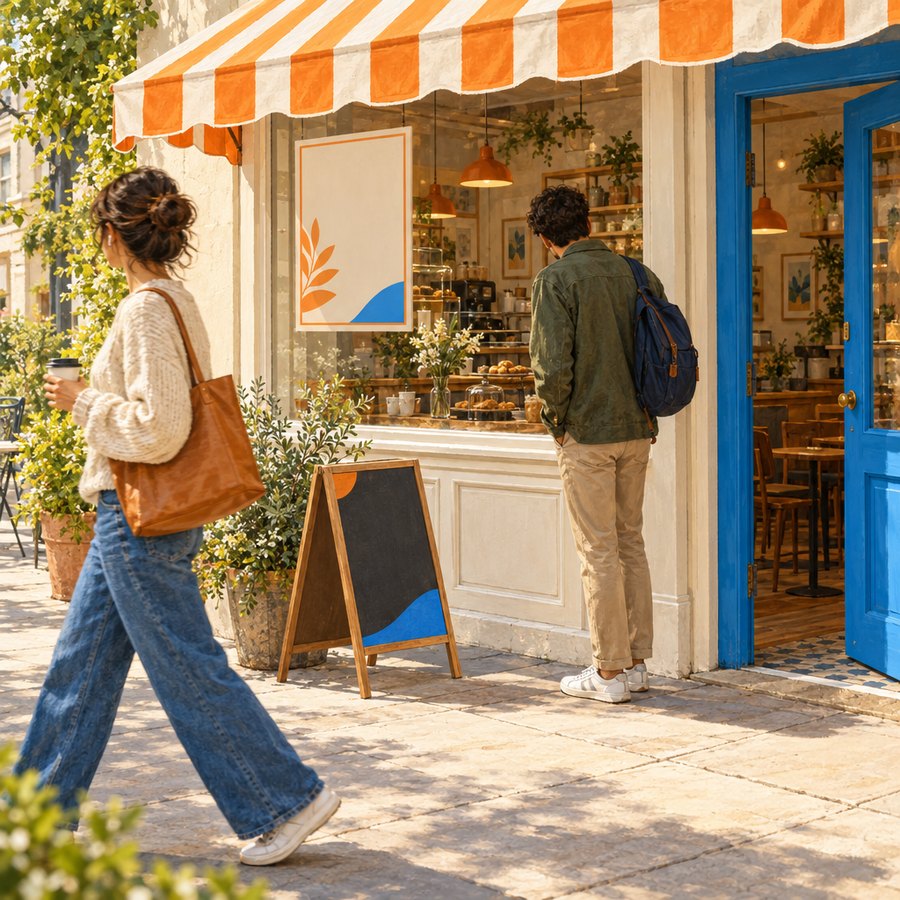
DoubleTree has handed guests a warm chocolate-chip cookie at the front desk since 1995, about 20 million a year by Hilton's own count. It lands at check-in, the one moment every guest passes through, usually tired and waiting for something. Rory Sutherland says a Chicago stay fifteen years earlier left him with two memories, the city and the cookie. A salon has the same two moments, the basin and the till, and every client passes through both.
Try this in a hair salon
You know this move even if you have never named it. The car salesperson quotes a price that makes you flinch, disappears to check with the manager, and comes back with a discount you feel oddly grateful for. The second price was the target all along. Two things happened to you. The refused first number made the second one look small, and the drop registered as a gift, which left you wanting to give something back, and the only thing you had to give was a yes. Cialdini and his colleagues tested it in 1975. Students asked to volunteer two years of their time nearly all refused, and 50% of them then agreed to chaperone a single zoo trip, against 17% of students who were only asked about the zoo. In 2012 Feeley, Anker and Aloe pooled 35 years of these studies and found the effect reliable, if modest.
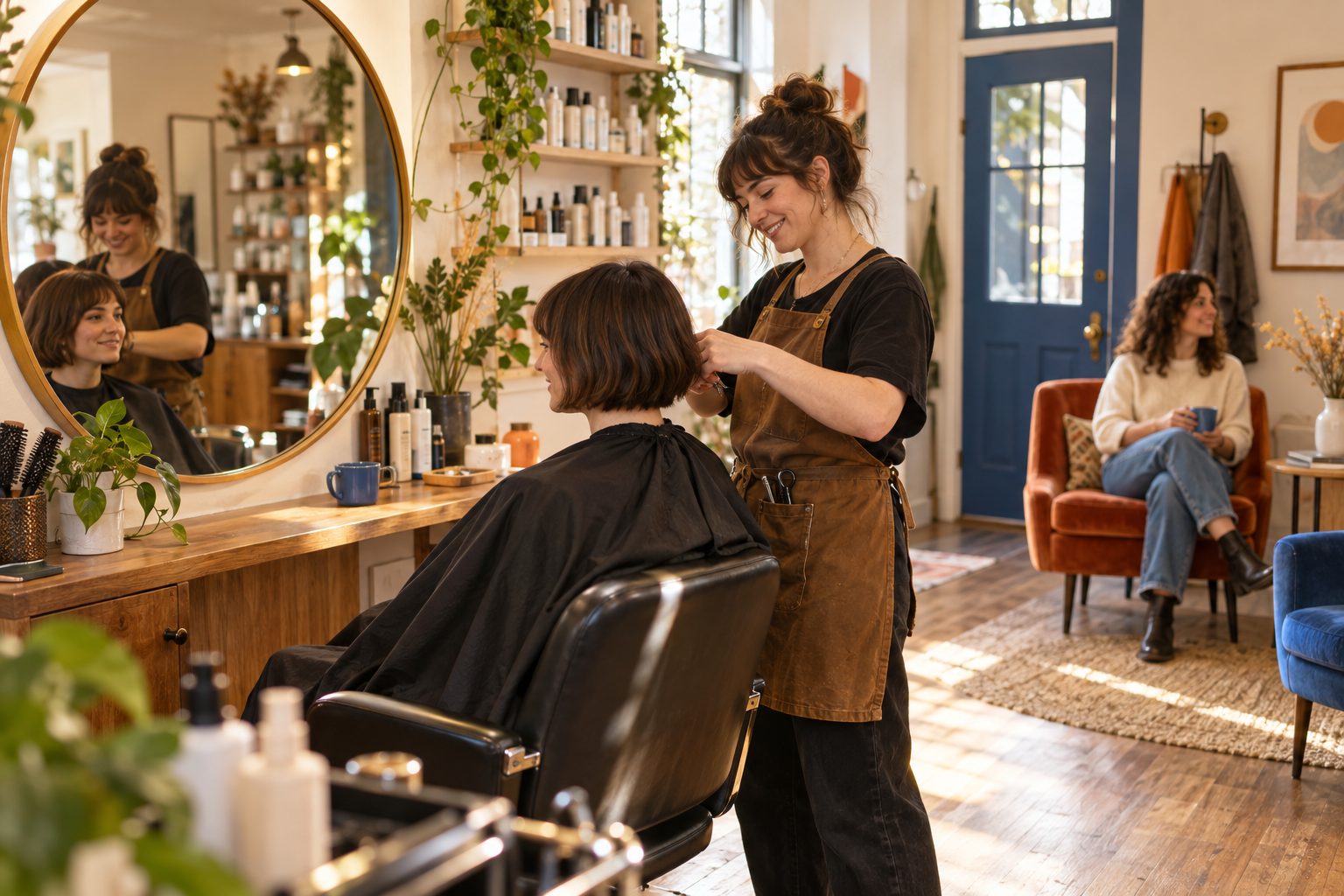
A stylist's version of this is the treatment and the rebook. Most salons ask for the small thing cold, "did you want a treatment with that today?", and get the no that a cold small ask gets. Run it the other way round. Offer the full version first, the one you would honestly recommend for her hair, and let her turn it down. Then offer the smaller one. The no she just gave you makes the second offer feel like you met her halfway, and most people meet you back.
Steal this: At the basin, before the colour goes on: "For hair this dry I'd normally do the full bond-repair treatment with the colour. It's £45 and adds about twenty minutes." Then stop talking. If it is a no: "Fair enough. The ten-minute mask at the basin is £15 and gets you most of the way there. Shall I just do that?" The first offer has to be real, priced as it really is, and something you would do for her hair if she said yes.
The mistake: Opening with something she would never buy. A £200 package she laughs at is not a refusable ask, it is the end of the conversation, and it makes the £15 mask feel like a consolation prize instead of a concession. The first offer is the one you would genuinely recommend, and the second is the one you expected to sell all along.
Try this week: Pick one add-on your stylists believe in. For one week, every stylist offers the full version first and the smaller one only after a no. Count add-ons sold per client against the week before. Once that works, run the same shape at the till on the rebook: offer the slot in six weeks, and if that is a no, offer to pencil something in that she can move.
More plays for a hair salon
- Play #5, Liking. The one genuine thing you have in common with a new client, and when in the appointment to mention it.
- Play #30, The Goal Gradient Effect. Why the loyalty card should never start empty, and how many stamps to put on it before you hand it over.
- Play #33, Peak-End Rule. The last ninety seconds of the appointment are what she tells her friends. What goes there.
- Play #41, Testimonial Power. How to ask for a review that reads like a story instead of a star, and when to ask for it.
- Play #19, Prestige Pricing. Which service on your list should cost more than you are comfortable charging, and why it sells the rest.
- Play #2, Commitment & Consistency. A one-line question at booking that makes the appointment feel like hers to keep.
- Play #1, Reciprocity. The small unasked-for extra at the basin, and why it comes back as spend and referrals.